
Last Updated: May 20, 2013
   |         |       |       |       |   


***
Use links and shortcuts below or menu above to navigate this site. Recent content updates are viewable in the blog area.

Database:

Query my reports database, selecting from criteria which include peak names, location, climb type, season etc.

Quick Links:

Some essential links I can't do without:


Jump To:

Select from drop-down list below to jump to a specific area on this site.


All photos and text for sverdina.com are Copyright © 2002-2013. Please ask before using any part of these pages. Terimah Kasih!


| Latest Posts |

Add to Google


Sunday, November 13, 2011

Paisano Pinnacle & Burgundy Spire - West Ridge to North Face, September 2011
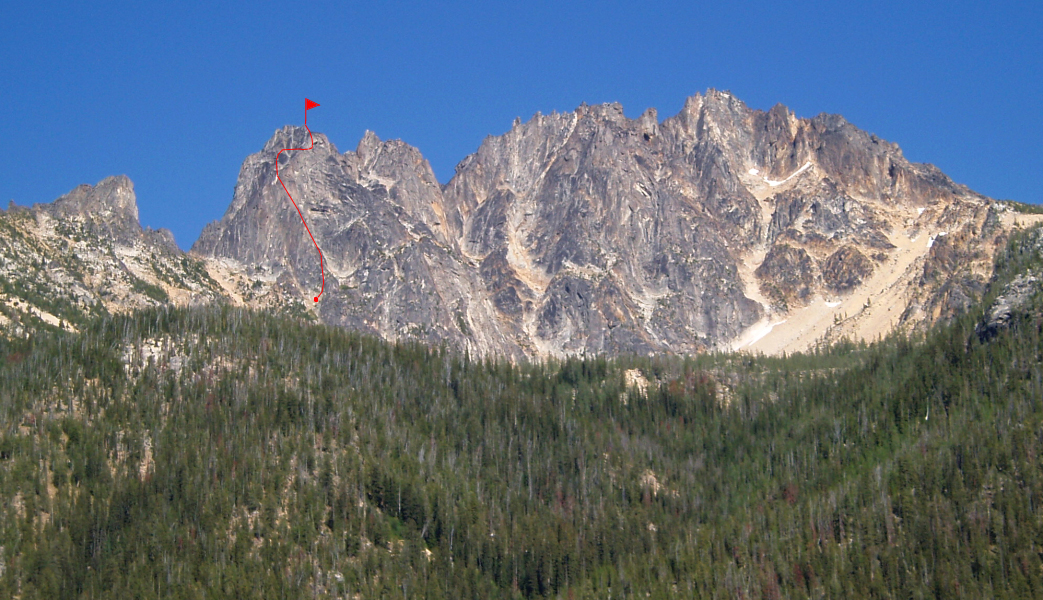
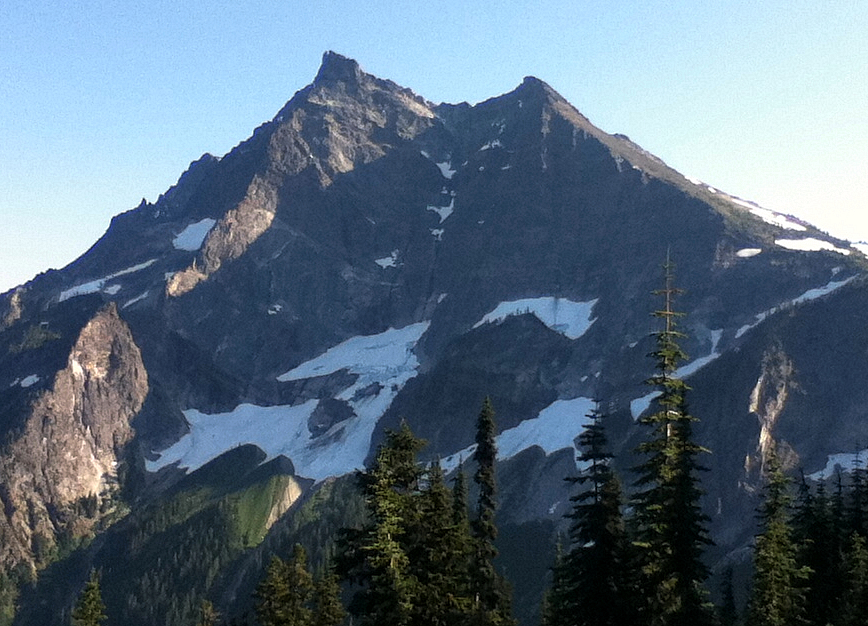
Silverstar Massif with Burgundy Spire at left as seen from the North Cascades Highway. Route overlay in red.

(Based on Tom's NWHikers report here)

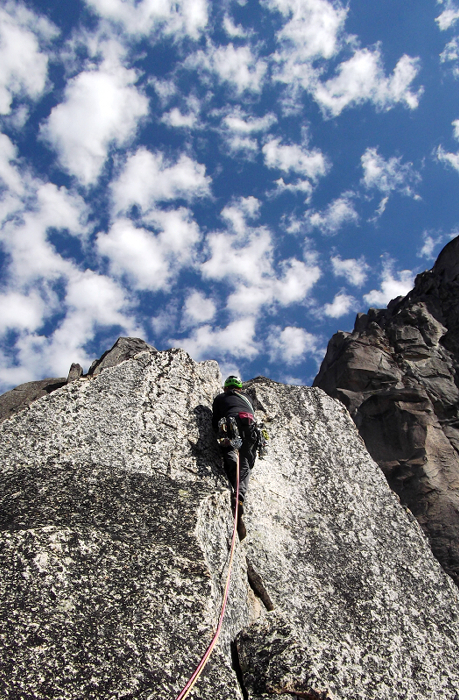
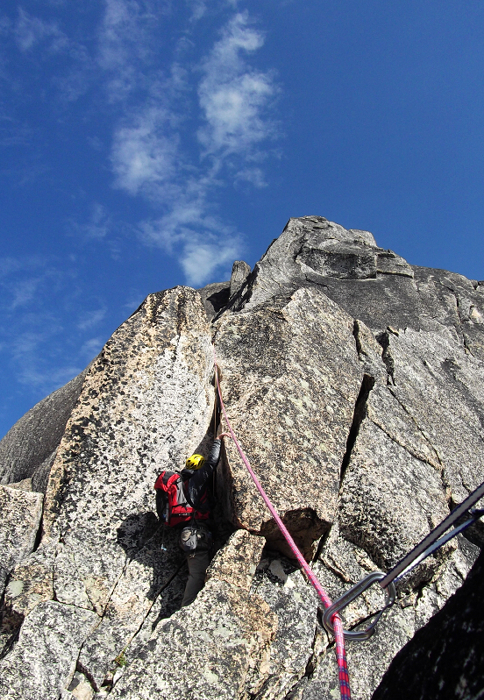
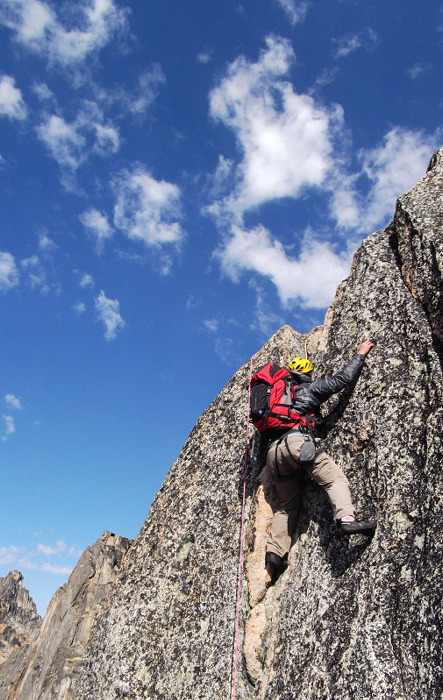
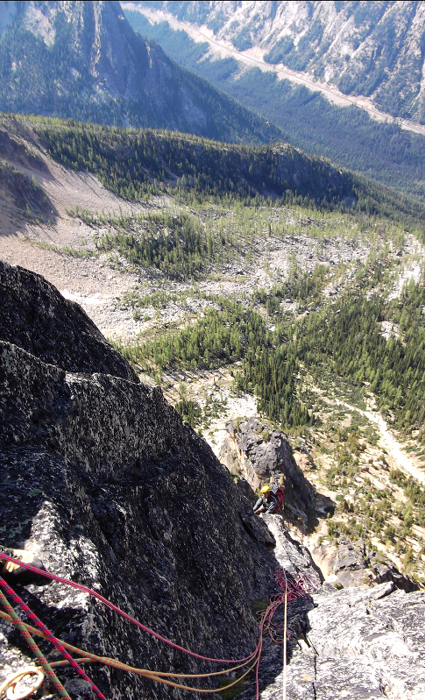
Of the peaks included in the late Dallas Kloke’s The Difficult Ten (a list comprised of the so-called 10 most difficult major peaks in Washington State to climb by their easiest route), Burgundy Spire is really an outlier of the Silver Star massif situated among the Wine Spires, just S of Burgundy Col. This peak is an anomaly on the list in that it is the only peak with a crag-like approach and it’s also the only peak that requires 5.8 rock climbing to reach its summit. Nevertheless, Burgundy Spire is an important peak, and its inclusion in the Difficult 10 is probably justified. We wanted to add on Paisano Pinnacle to our agenda - supposedly the best long, moderate, alpine rock route at Washington Pass. It wound up being a full, but stellar day of climbing for Tom, Daniel, and I.
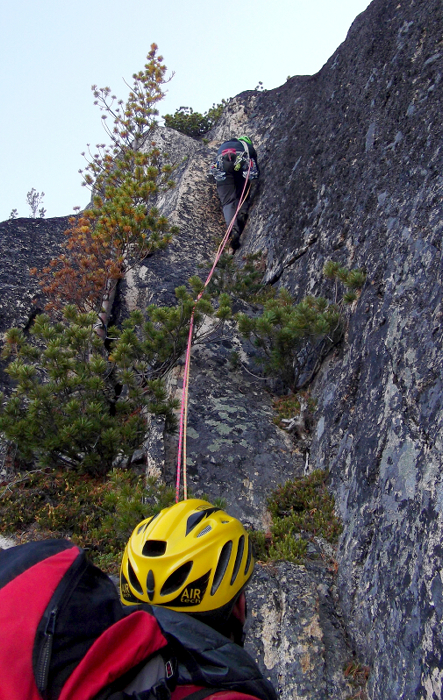
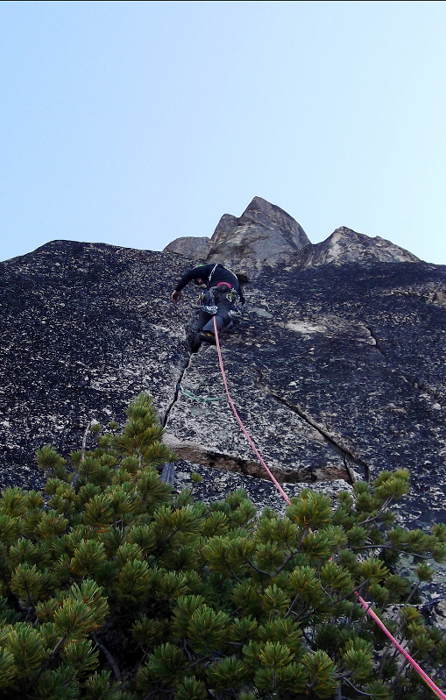
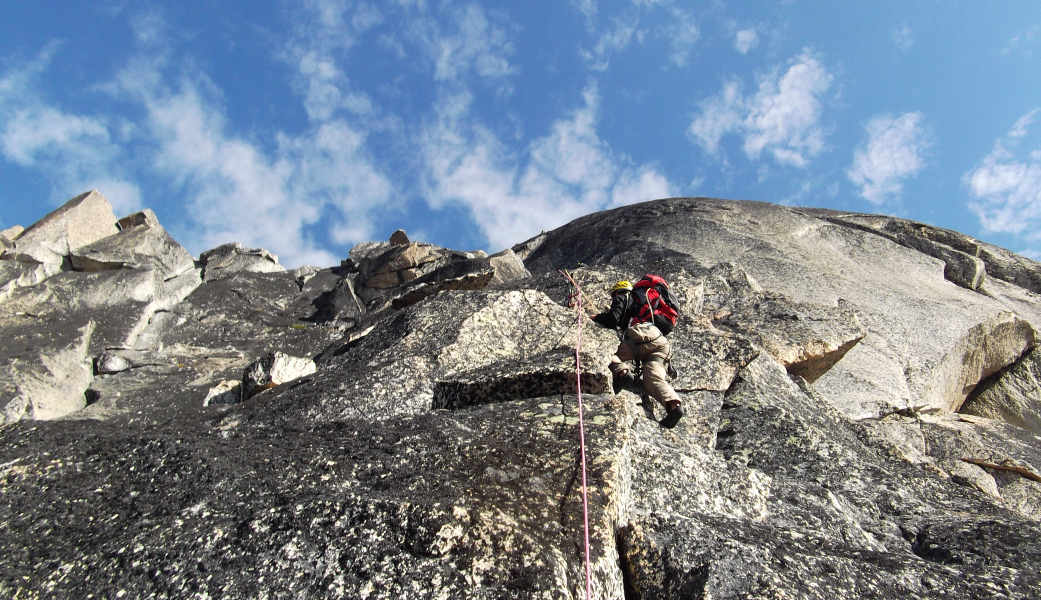
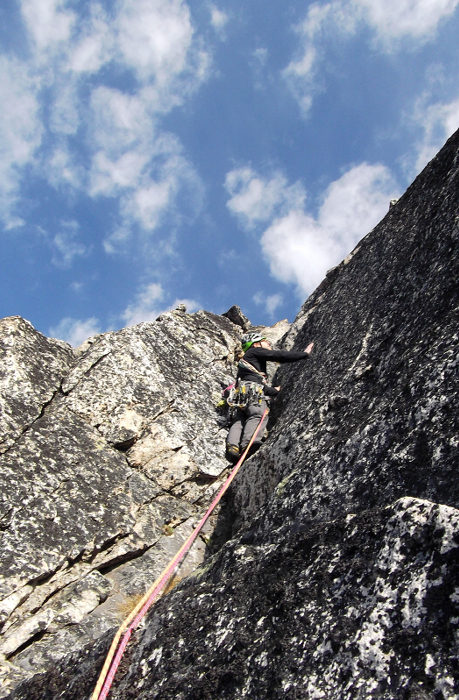
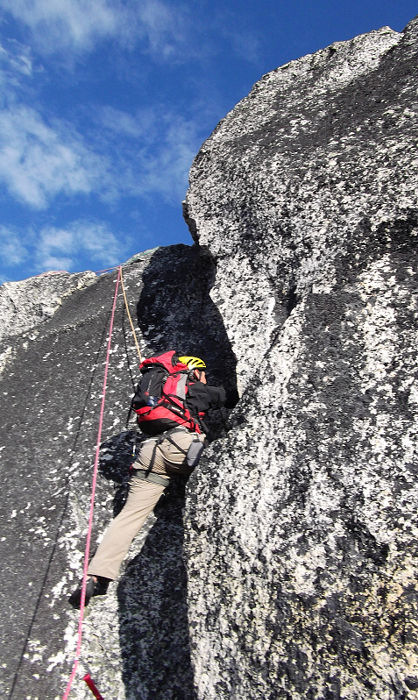
Starting up the first pitch. The second pitch leading to the ridge crest. Daniel enjoying the fun (but short) twin cracks on pitch 5. Nearing the top of the 6th pitch on Paisano. Stellar climbing high on Paisano's West Ridge. Working through a boulder problem on the West Ridge. Tom climbs a steep crack near the top of Paisano Pinnacle.
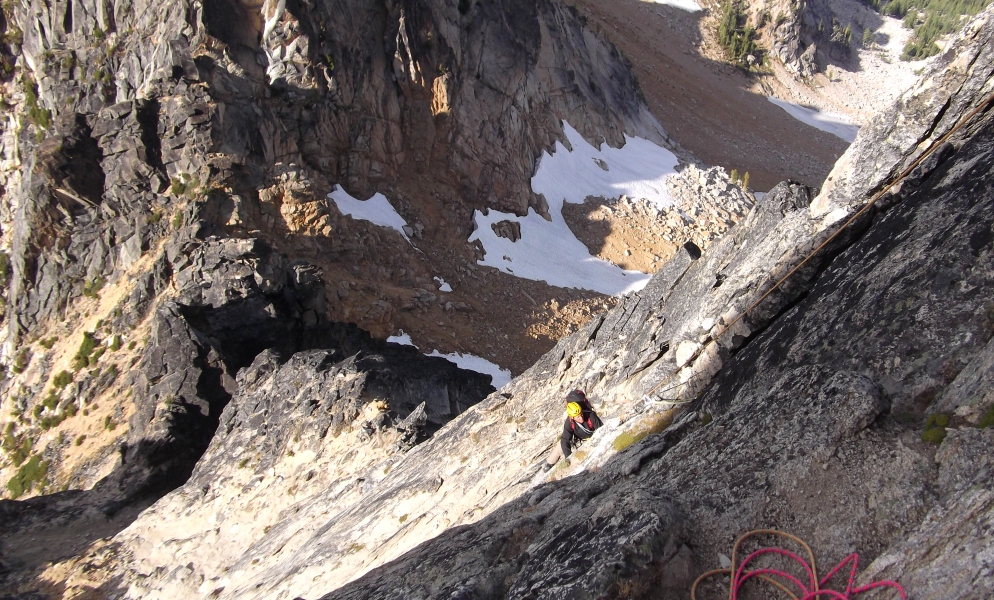
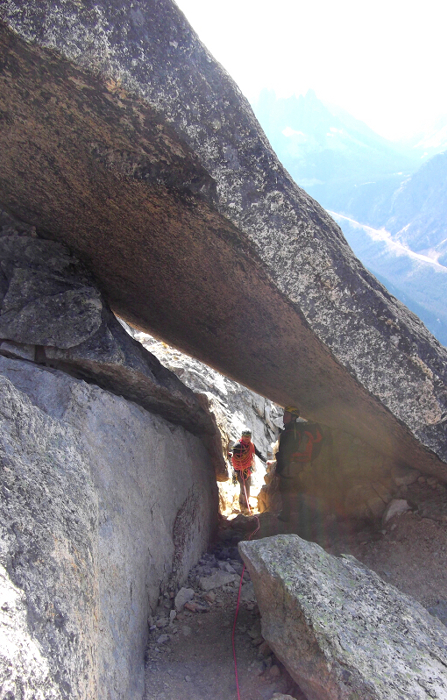
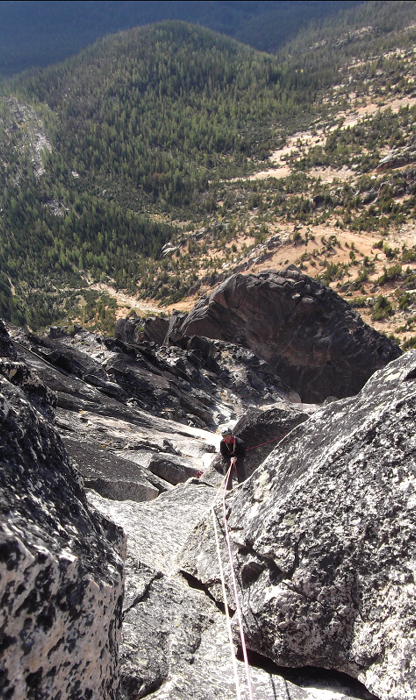
Looking down Paisano's final technical pitch. Looking down the N Face of Burgundy Spire, about two pitches below the summit. Steep and enjoyable climbing on Burgundy's North Face. The giant chockstone tunnel on the traverse. The 6th pitch of the N Face of Burgundy Spire.  This was the 10th pitch of climbing on the day for us between Paisano and Burgundy.
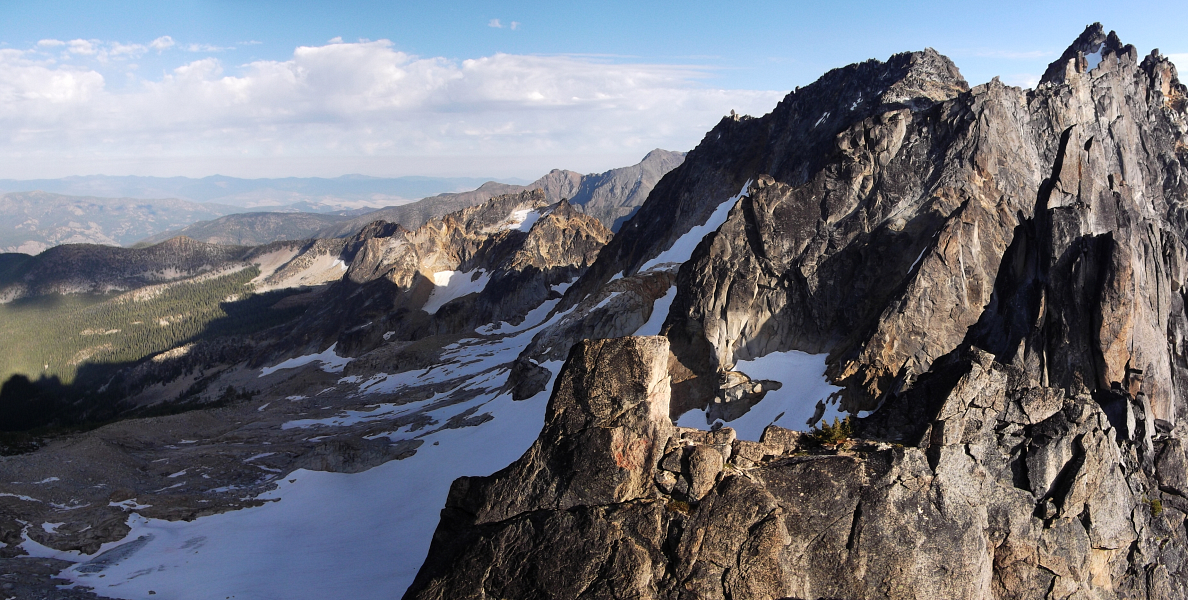
Daniel starts up the penultimate pitch on Burgundy. Fun with the tricky off-width just below the summit. Summit panorama looking west. The view towards Chianti Spire and Silver Moon from the summit of Burgundy Spire.
The first of 5 rappells off of Burgundy Spire.

Friday, November 4, 2011

Buck Mountain - West Route, August 2011

Buck Mountain as seen from camp in the basin below High Pass.

At 8528 feet Buck Mountain is one of the taller, and as you will see from my rather lousy IPOD photos also one of the more massive non-volcanic peaks in Washington State. Being the second-highest point on Chiwawa Ridge after 8,760-ft Fortress Mountain, Buck offers unobstructed 360-degree views as well as, and perhaps more importantly, a unique perspective on some of The Cascades’ finest alpine high country. The allure of experiencing first hand Buck’s veritable Zen garden of manicured alpine meadows, meandering streams and granite pools is primarily what drew me to explore this area. Tagging the summit was just the proverbial icing on the cake for me.

The West Shoulder Route (from Trinity) which I followed is complex and is probably best described in Paul Klenke’s summitpost report. I will only add a few observations of my own – first, I found it best to leave the Buck Creek Trail after the clearing indicated in Paul’s report, at a point shortly after where the trail re-enters forest and makes a rightward bend coming nearer to Buck Creek than at any other time on the approach. There’s evidence of a path cutting off to into brush at left here but which unfortunately also vanishes well before the creek crossing. Nevertheless, it should only take a few minutes to reach the creek where a couple large logs can be used to cross over from the sandy bank to the other side.

Once across, the idea is to turn left and proceed on a rising traverse making sure not to gain too much elevation too quickly. Occasional hints of a trail reassured me that I was headed in the right direction (upon return in my case). Be sure to cross at least one, if not two prominent gullies before turning up sharply towards the crest of the timbered East Ridge of Mount Cleator. If you go up too soon you’ll end up in cliffy terrain interspersed with steep, slippery duff that’ll make you wish you had your ice axe in hand! As a general rule, it seems best to gain the ridge at around 5,000 ft or lower.

I never noticed the so-called campsite at 5,800 ft on the ridge (I did see a blue tarp upon my return though), at which point one should angle down to the left (south) into the basin. I suspect that I was too far right (north) and thus missed the obvious trail heading left. Instead, I proceeded upwards to about 6,500 ft before realizing I’d gone too far. I chose not to go back down thinking I could still get to where I needed to be. Frustratingly, I was forced ever higher up the ridge by steep, blocking cliffs. Finally at roughly 7,000 ft I located a short, sketchy gully that allowed me to descend into the heather basin just below High Pass where I set up camp for the night.

I found the rest of the route to Buck’s serene meadows, High Sierra-like west basin and beyond to the summit to be relatively straight forward. The ledge with snag low on Berge’s East Ridge is a unique and hard-to-miss feature, without which the approach to the Berge-Buck basin would likely be somewhat more involved and certainly brushier. Finally, there seems to be ongoing debate as to which of the two main summits is taller-the North or Middle? The consensus I think is that the 8,760+ ft Middle Summit is it. I went for the 8,760-ft North Summit as it seemed to be the more aesthetic of the two. If it really matters, climb both and tag The Horn overlooking the immense East Ridge while you’re at it!

The all-important snag at the toe of Berge's East Ridge. Serene alpine meadow at the saddle between Buck and Berge. Sierra-like scenery in the basin below Buck's West Slope.
View from West Slope of Buck. Upper basin on Buck with North Summit at left and Middle Summit at right. A sharpening ridge crest on the North Summit.
Looking down on King Lake. Summit panorama from NE to SE. Summit panorama looking towards Glacier Peak.

*Master list of trip reports and photos here: climbing or snowboarding.

*To search this site, enter criteria in the text box below.
©2013 sverdina.com |       RSS feed